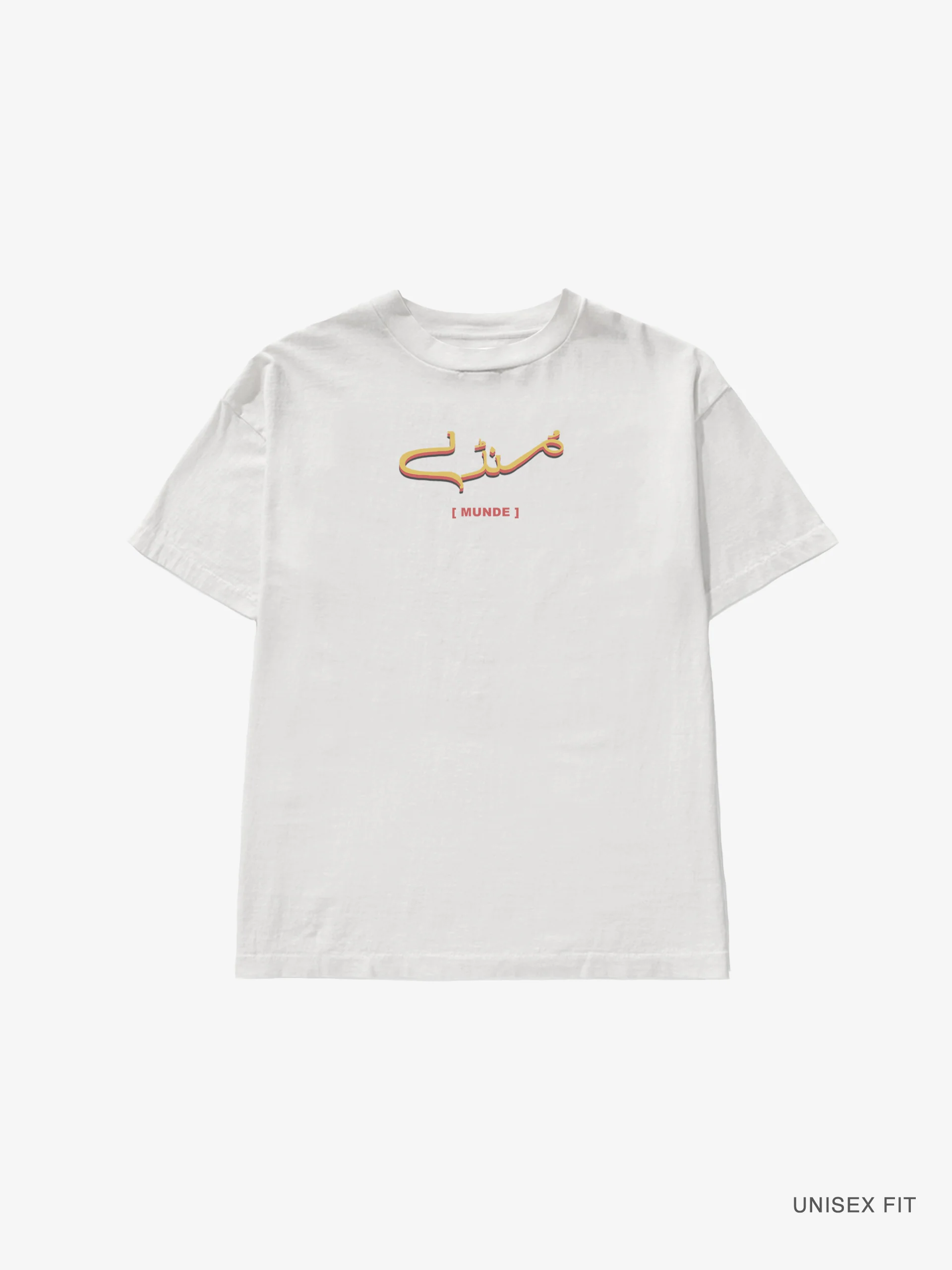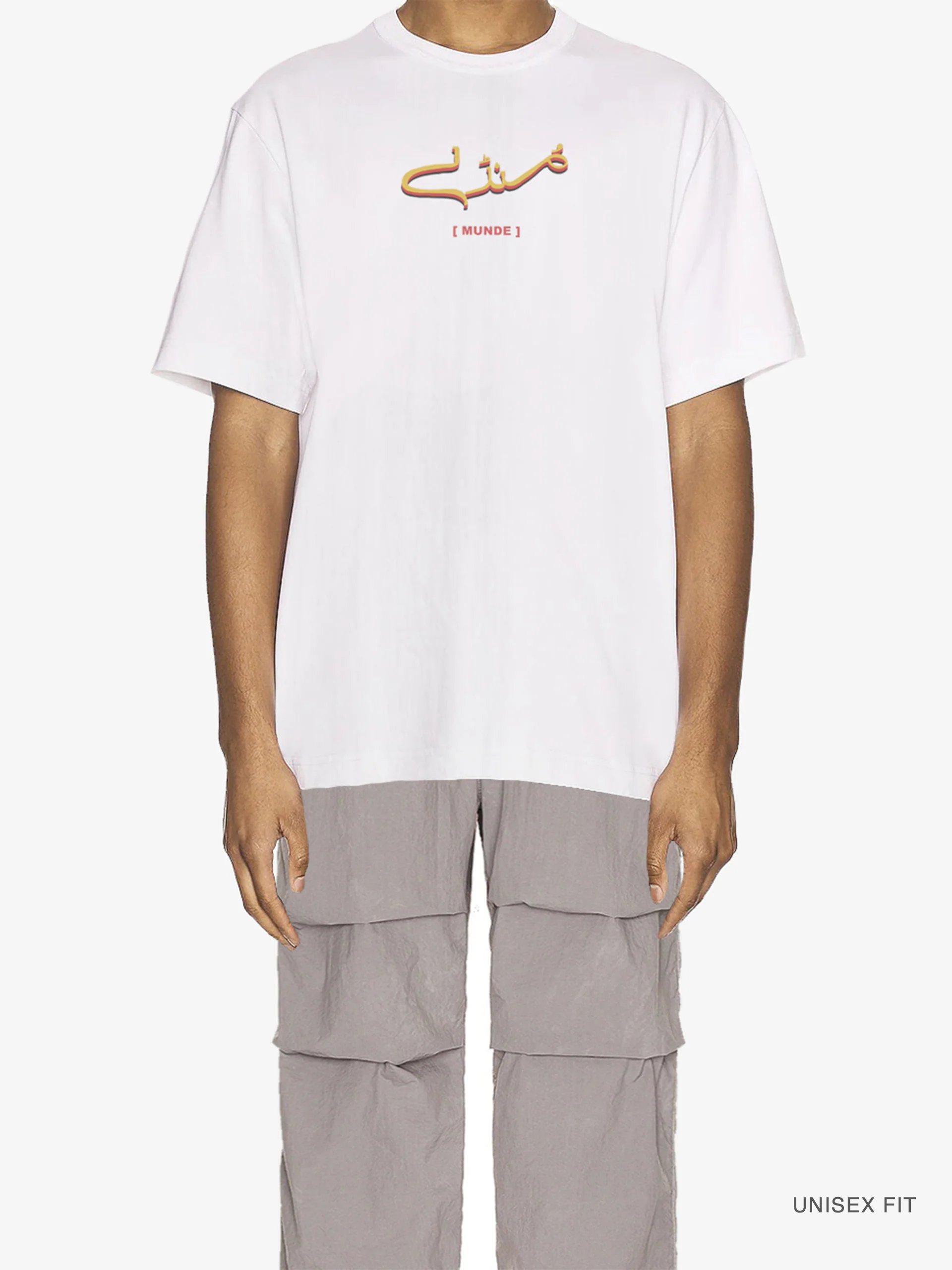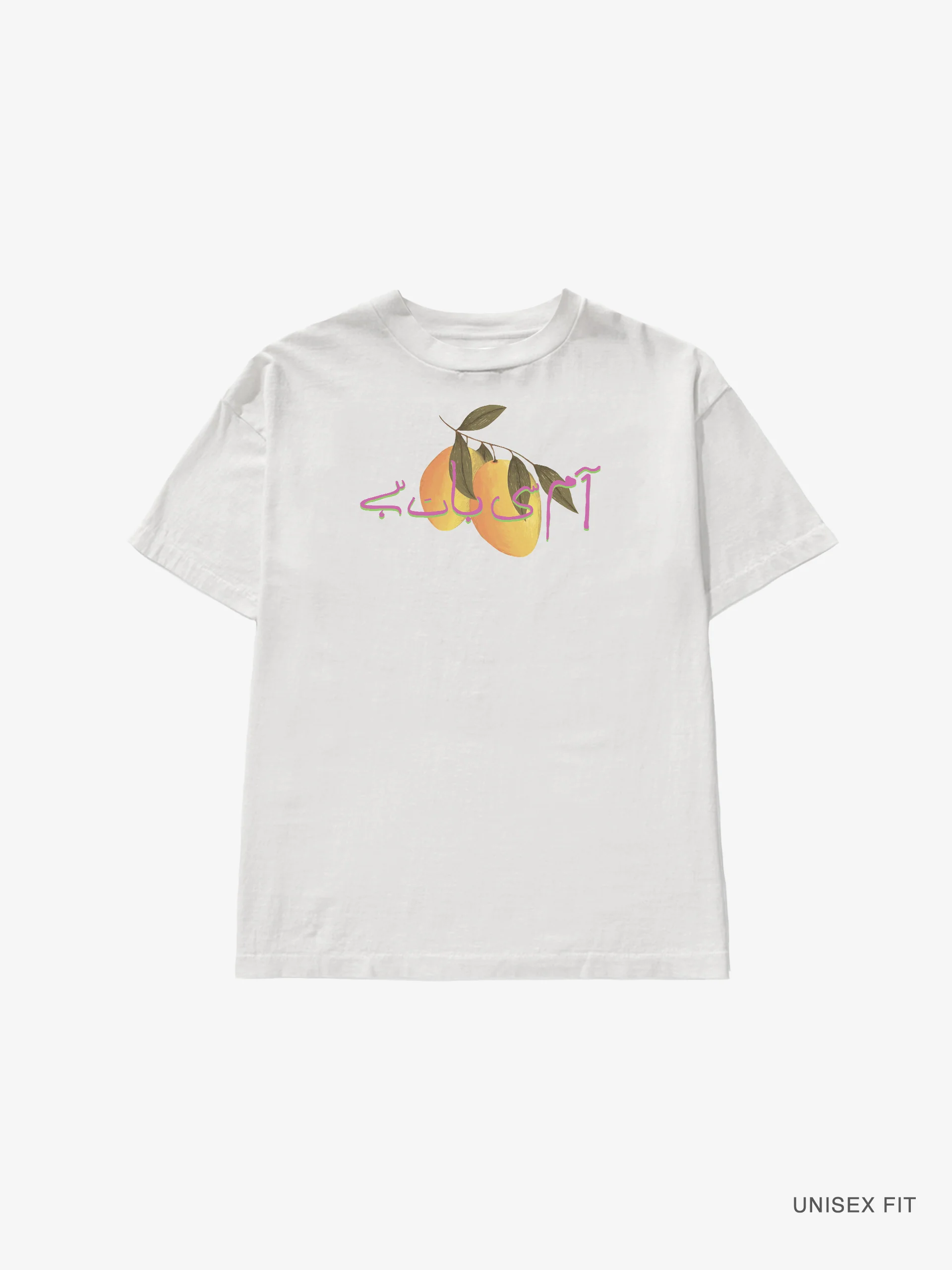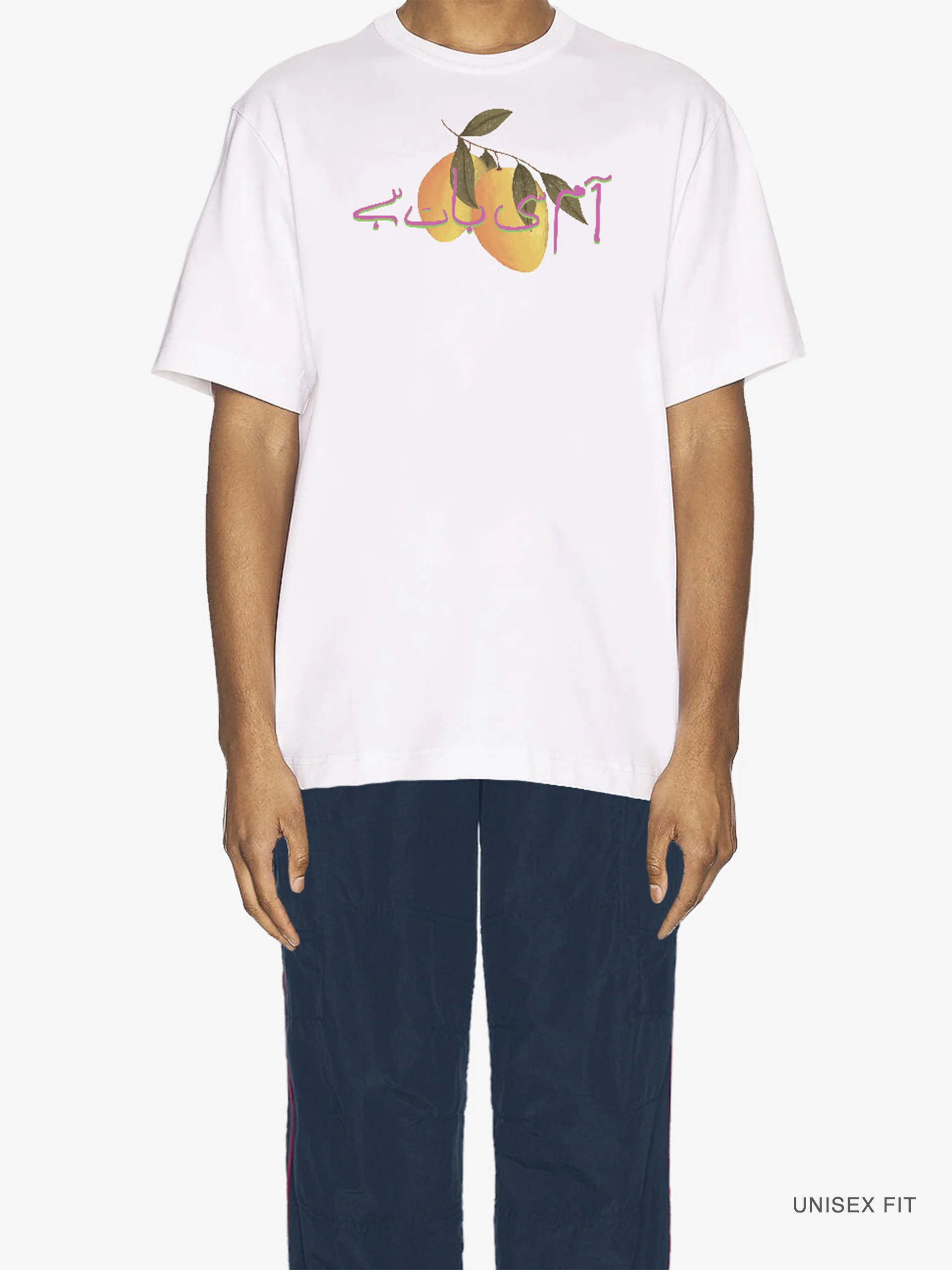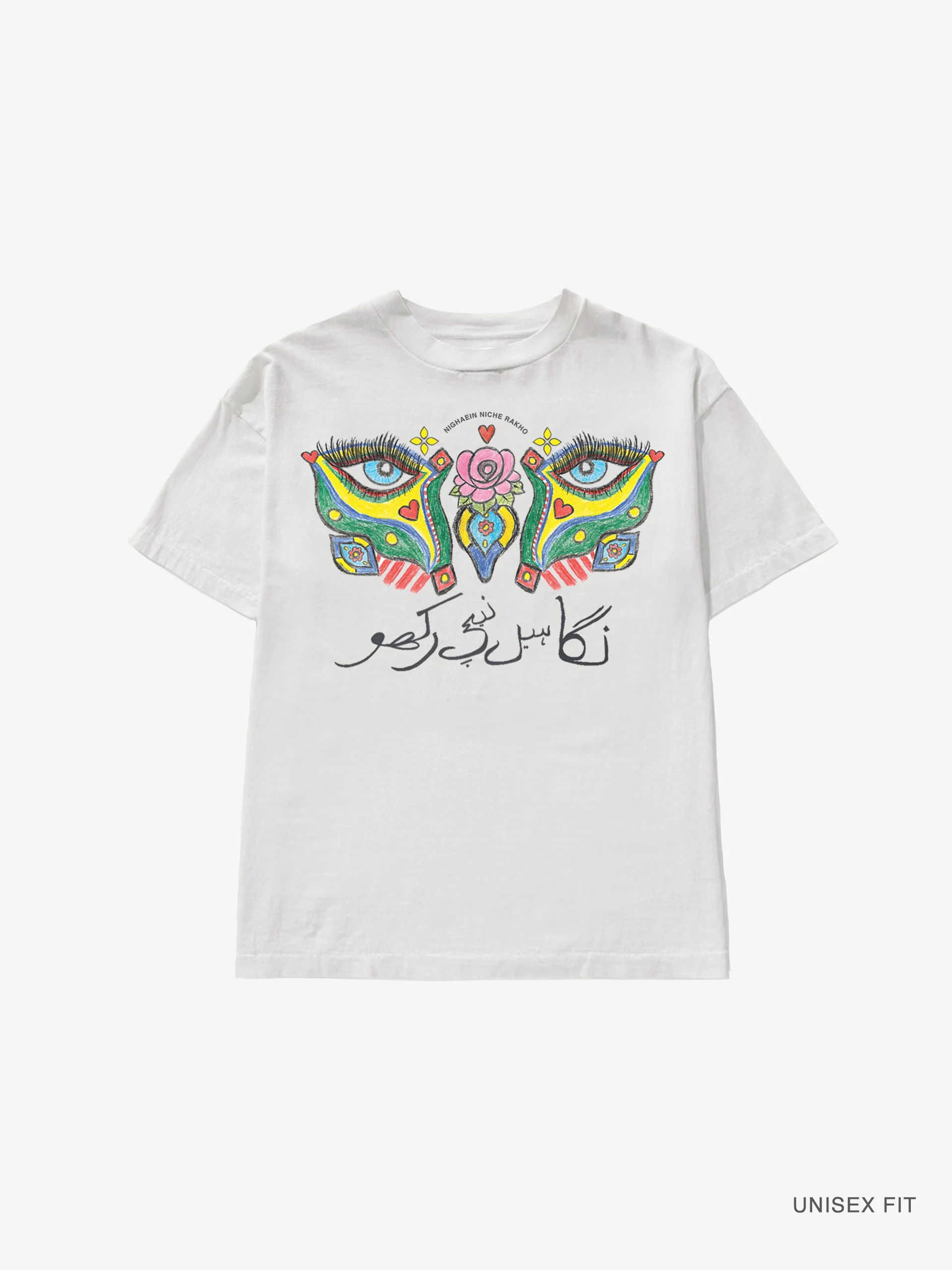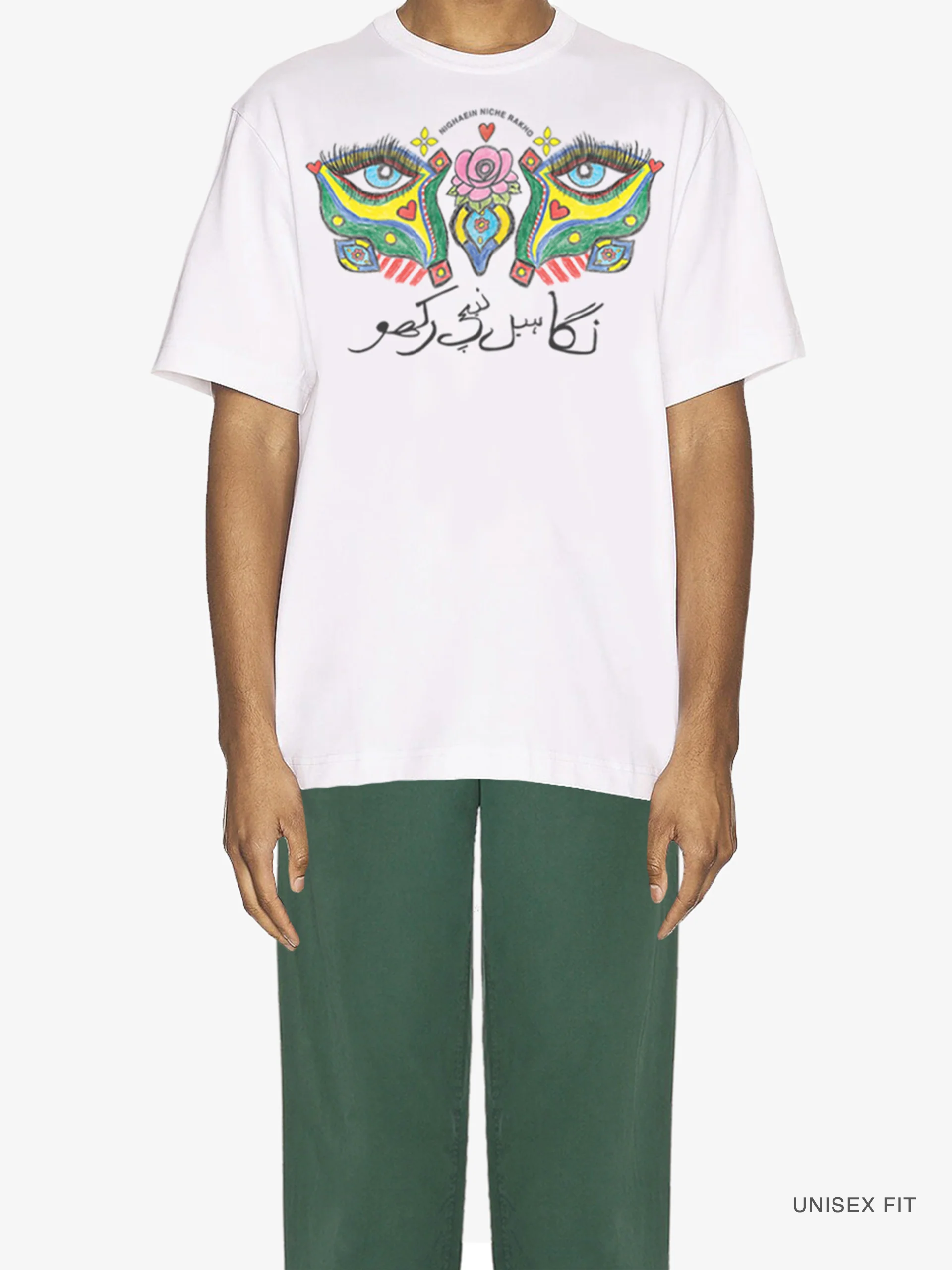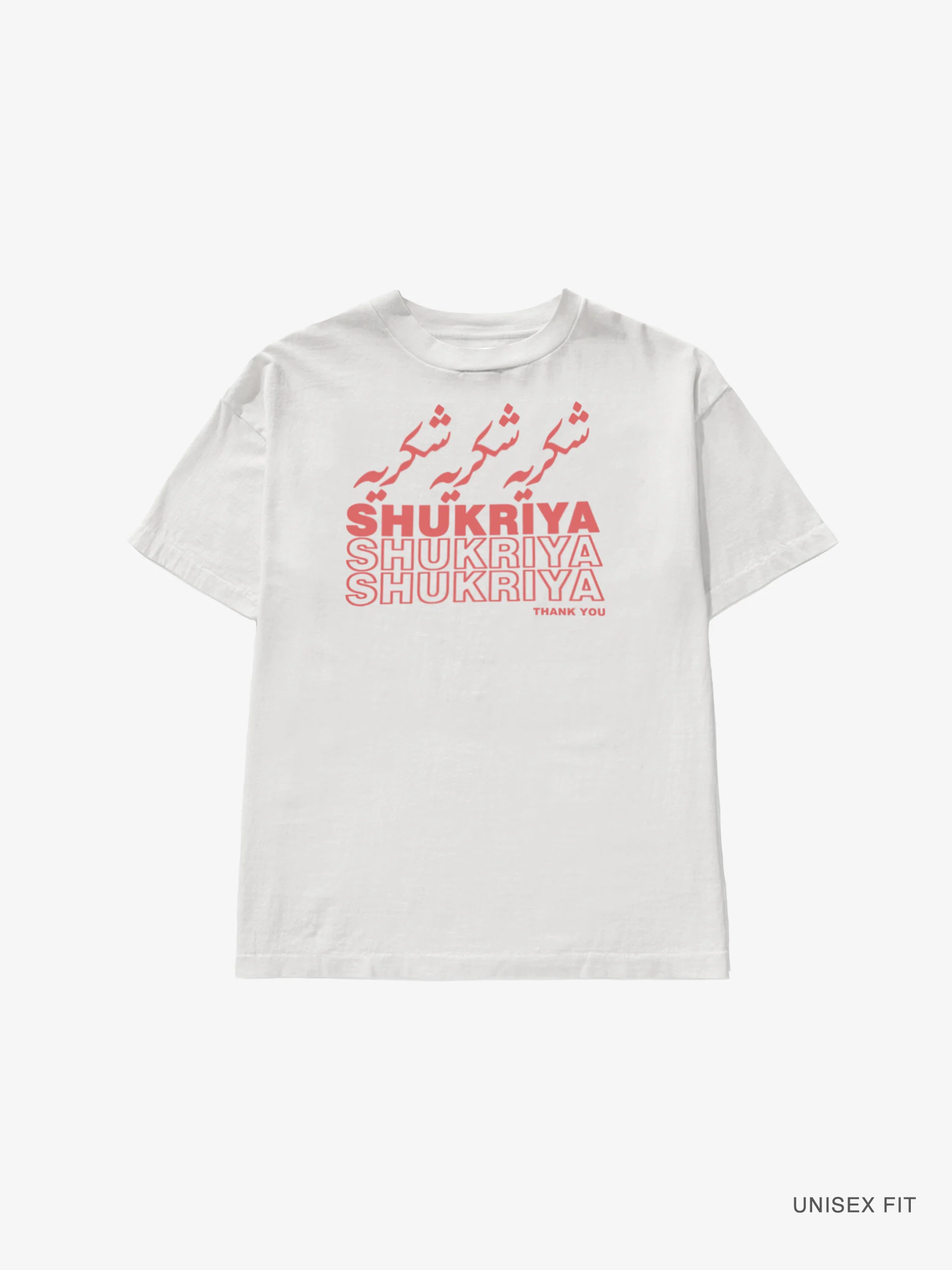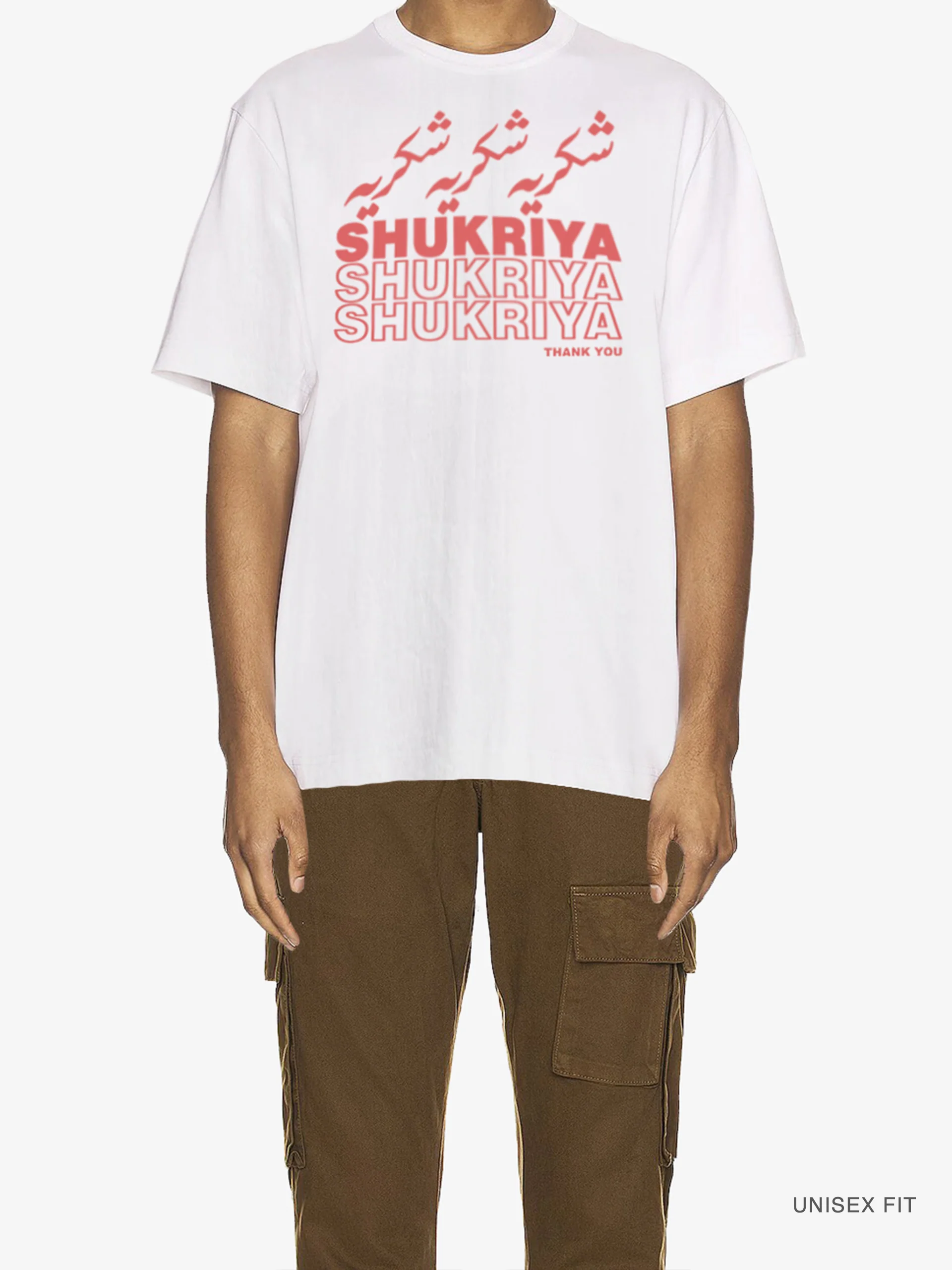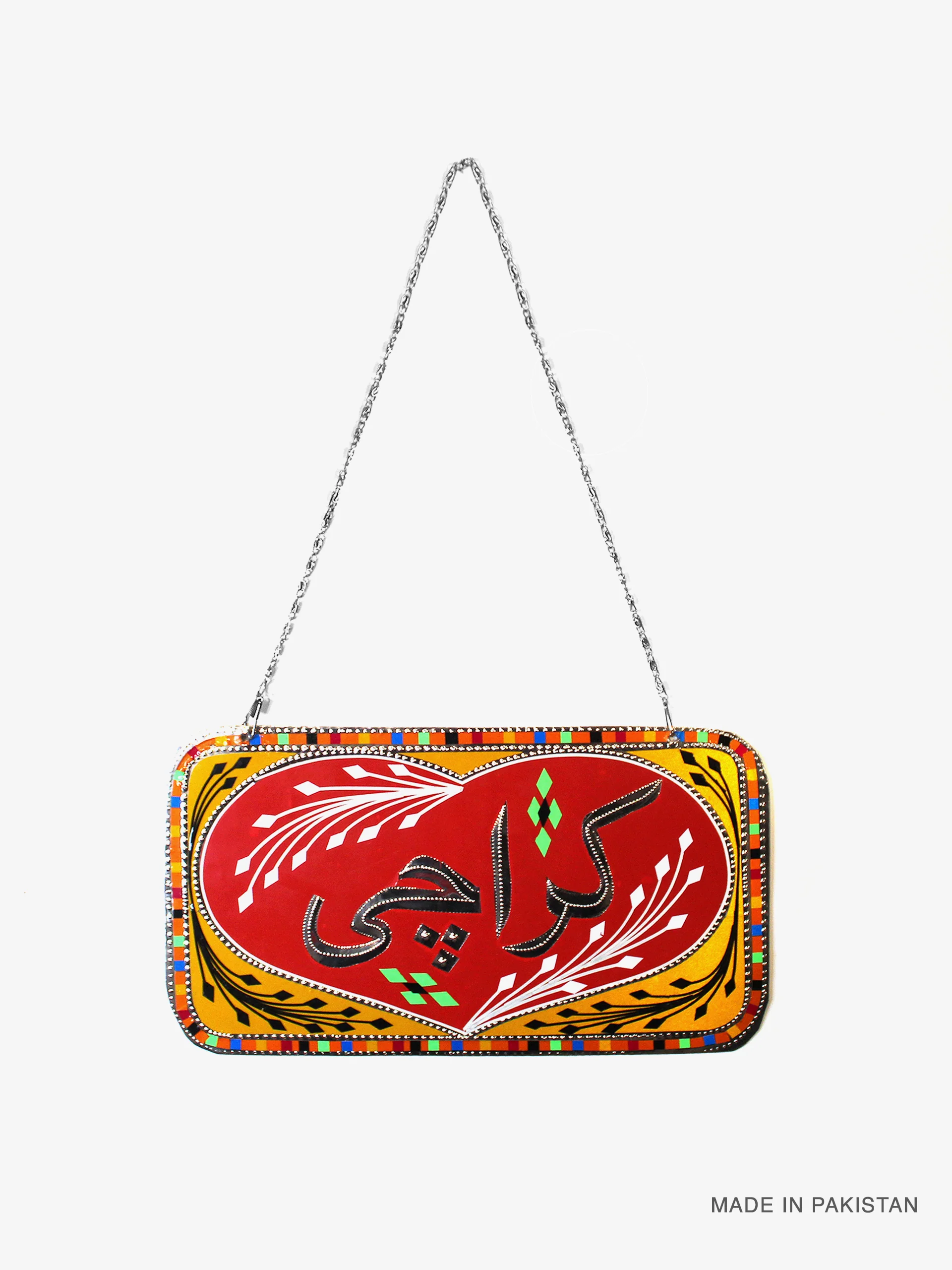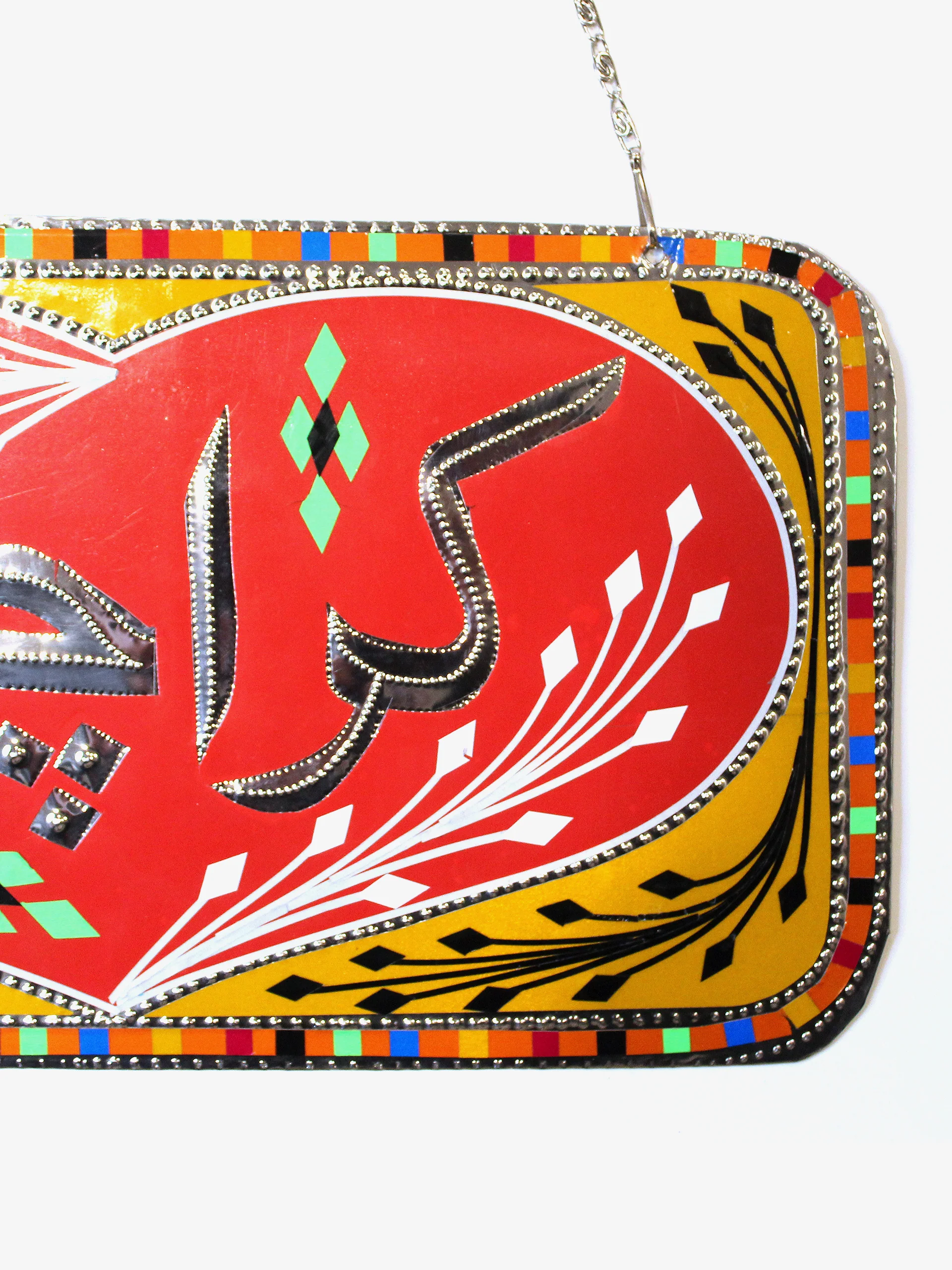
Garment Dyed | "Nazar Se Bachao" Evil Eye Tee
Garment Dye is a special pre-shrunk fabric treatment process to achieve a softer and more vintage feel for the tee, resulting to a better quality & elevated product.
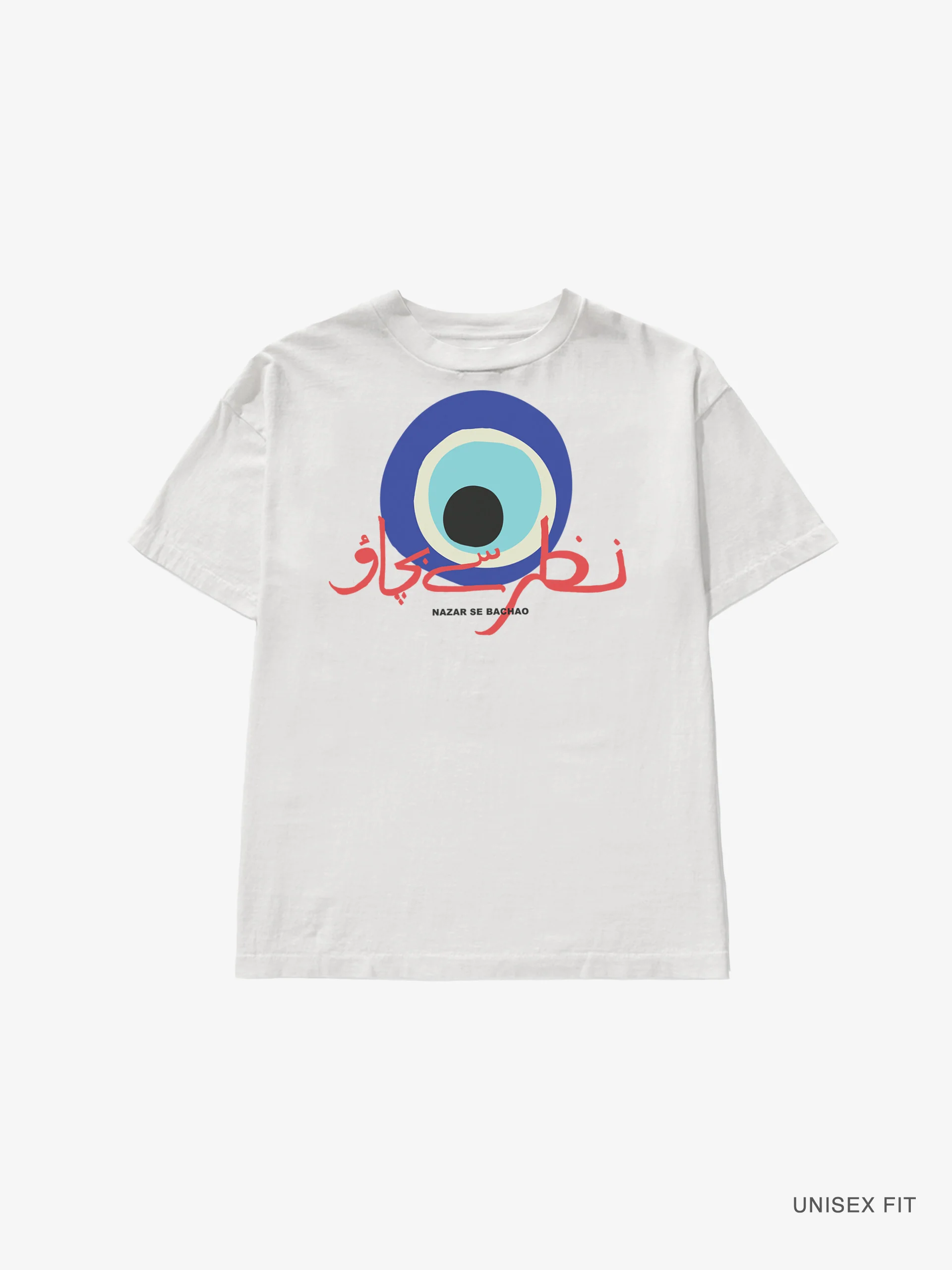
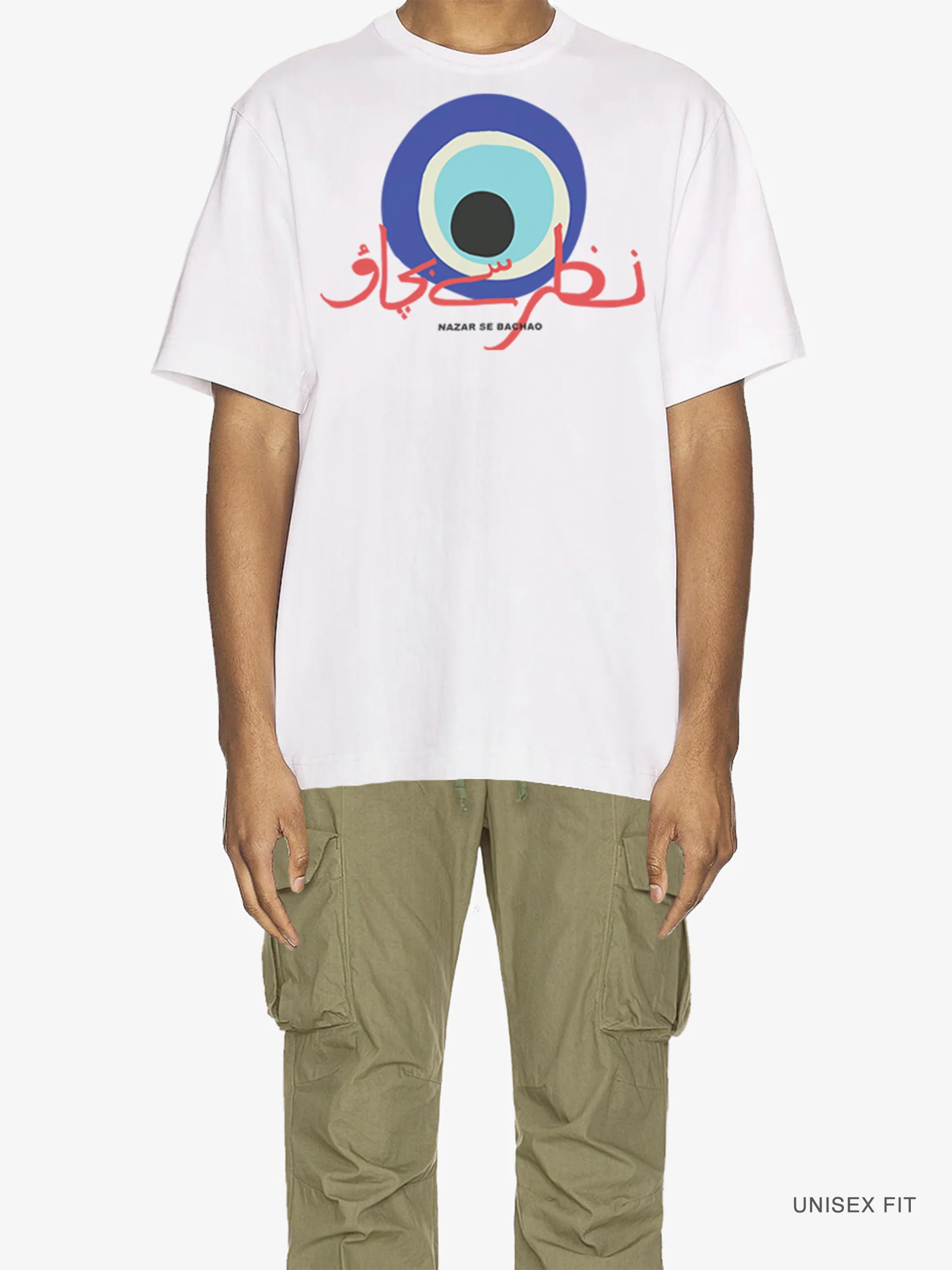
• Urdu Reads: "Nazar Se Bachao" (Protect me from the evil eye)
• 100% Ring-Spun Cotton Garment Dyed Tee
• Fabric Weight: 6.1 oz/yd²
• DTG Print Technique on Sourced Tee
• Size Up for Oversized Fit. See Guide.
Nazar or the evil eye is a widely believed phenomenon in Pakistani culture, as it is prevalent with many other cultures alike. It is the belief that someone can unintentionally harm another person or their possessions with their envious or malicious glance. This belief in nazar is deeply ingrained in Pakistani culture and has impacted everyday life and traditions of Pakistanis.
Beliefs of Nazar, at the core, is an Islamic belief, which like many religious beliefs, can have an effect on how culture adopts it. Many Pakistanis practice different rituals to protect themselves and their loved ones from the evil eye, but the significance is how the belief in nazar is deeply rooted in Pakistani culture and is an essential part of the country's customs and traditions.
People often use various remedies such as wearing protective amulets, reciting certain verses from the Quran, and practices, for instance, hang a black thread or amulet, called "taweez," around their necks, or may sprinkle salt or burn incense to ward off evil spirits.
Nazar is also reflected in the way people interact with others. For example, it is considered impolite to praise someone excessively as it is believed that it can attract the evil eye. Similarly, parents often refrain from boasting about their children's achievements in public to avoid any potential harm caused by the evil eye.
Though the seriousness of how Pakistani culture react to nazar, it is also a very witty and playful concept used light heartedly when appropriate. Often times, nazar becomes an easy excuse to blame when something goes wrong for Pakistanis.
Product Information
Product Information
Shipping & Returns
Shipping & Returns
Description
Garment Dye is a special pre-shrunk fabric treatment process to achieve a softer and more vintage feel for the tee, resulting to a better quality & elevated product.
• Urdu Reads: "Nazar Se Bachao" (Protect me from the evil eye)
• 100% Ring-Spun Cotton Garment Dyed Tee
• Fabric Weight: 6.1 oz/yd²
• DTG Print Technique on Sourced Tee
• Size Up for Oversized Fit. See Guide.
Nazar or the evil eye is a widely believed phenomenon in Pakistani culture, as it is prevalent with many other cultures alike. It is the belief that someone can unintentionally harm another person or their possessions with their envious or malicious glance. This belief in nazar is deeply ingrained in Pakistani culture and has impacted everyday life and traditions of Pakistanis.
Beliefs of Nazar, at the core, is an Islamic belief, which like many religious beliefs, can have an effect on how culture adopts it. Many Pakistanis practice different rituals to protect themselves and their loved ones from the evil eye, but the significance is how the belief in nazar is deeply rooted in Pakistani culture and is an essential part of the country's customs and traditions.
People often use various remedies such as wearing protective amulets, reciting certain verses from the Quran, and practices, for instance, hang a black thread or amulet, called "taweez," around their necks, or may sprinkle salt or burn incense to ward off evil spirits.
Nazar is also reflected in the way people interact with others. For example, it is considered impolite to praise someone excessively as it is believed that it can attract the evil eye. Similarly, parents often refrain from boasting about their children's achievements in public to avoid any potential harm caused by the evil eye.
Though the seriousness of how Pakistani culture react to nazar, it is also a very witty and playful concept used light heartedly when appropriate. Often times, nazar becomes an easy excuse to blame when something goes wrong for Pakistanis.