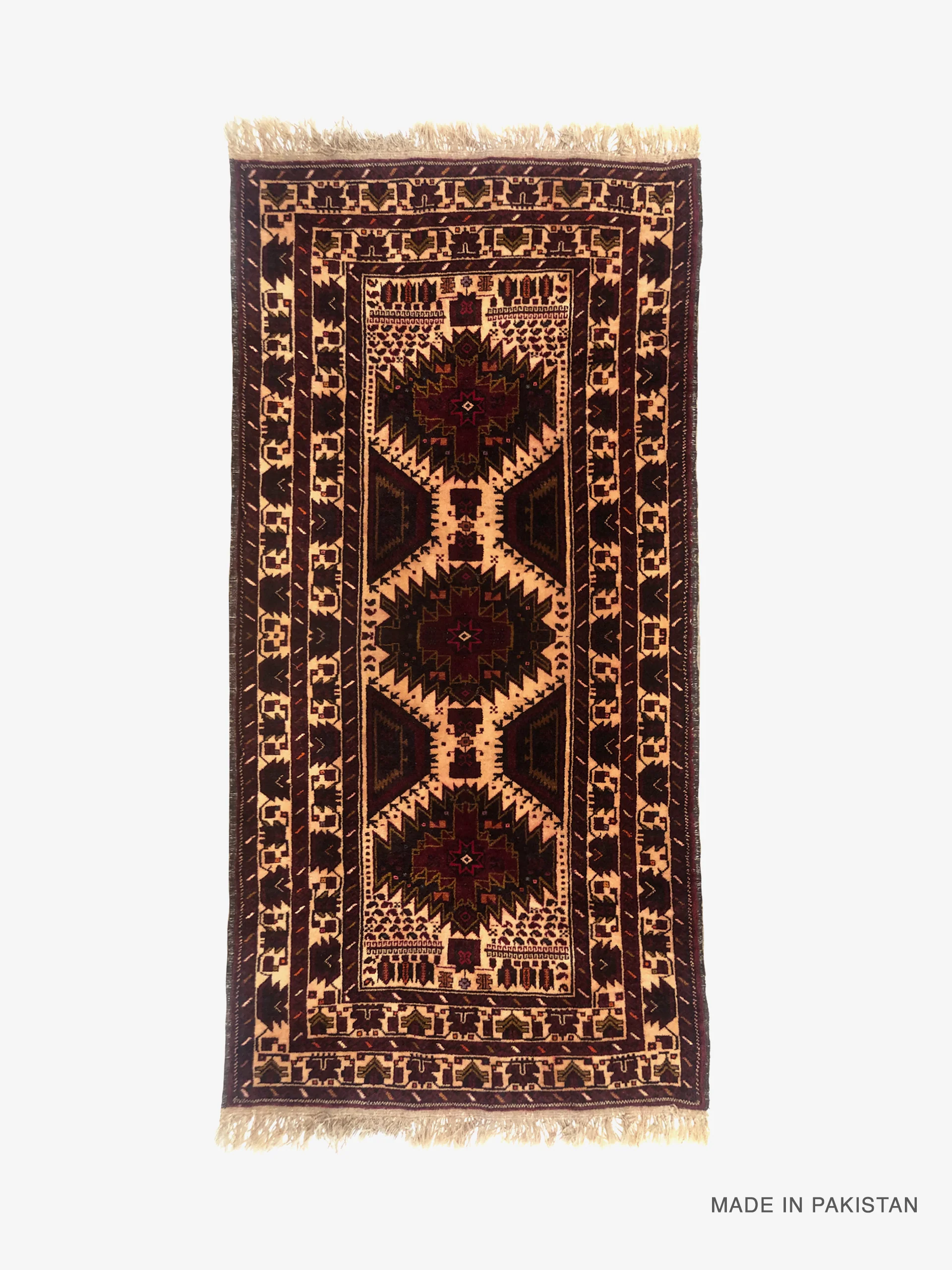
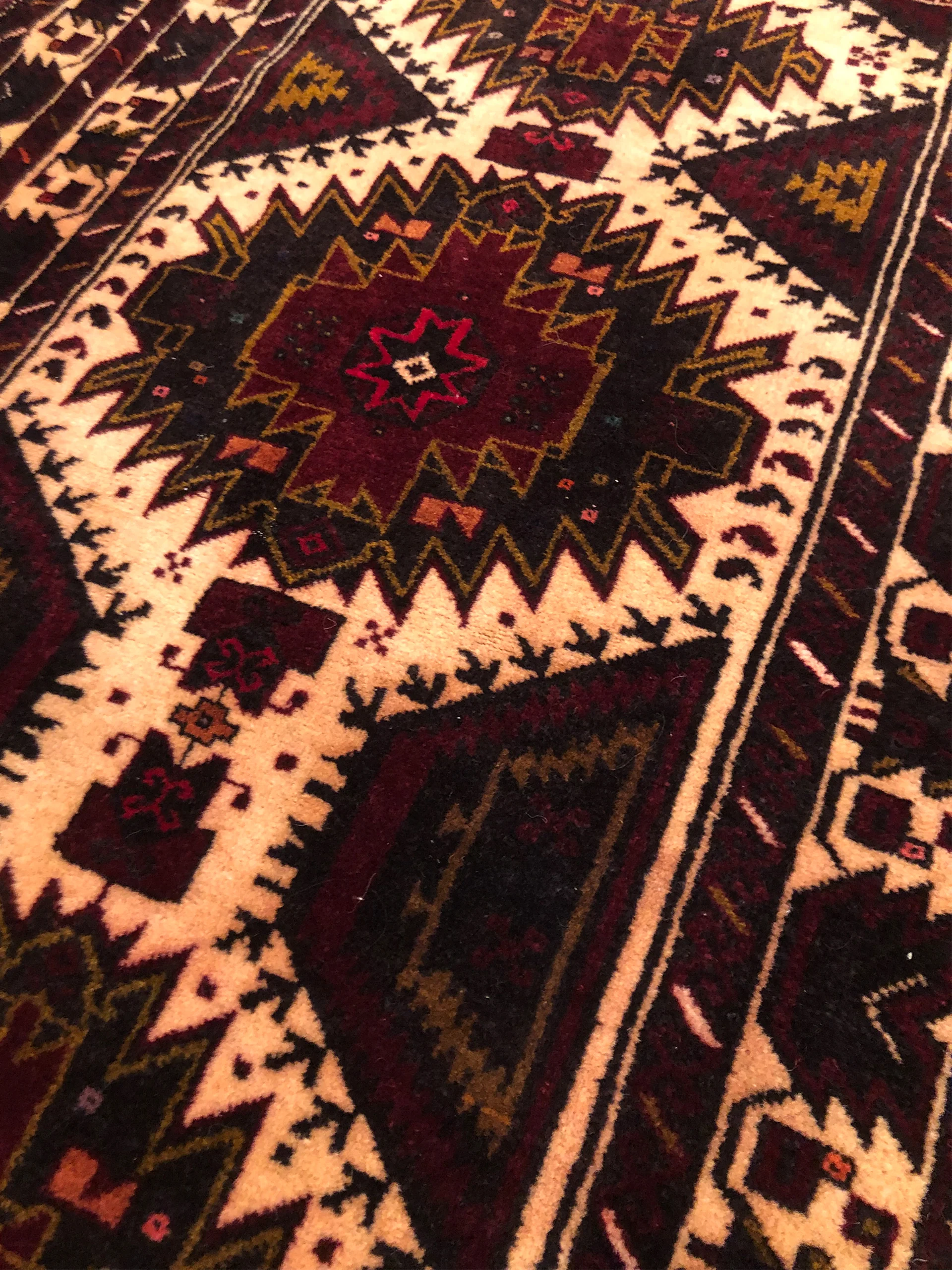
Vintage | Hand Knotted 3.8' x 6.5' Wool Area Rug
Vintage Item
Made in Pakistan
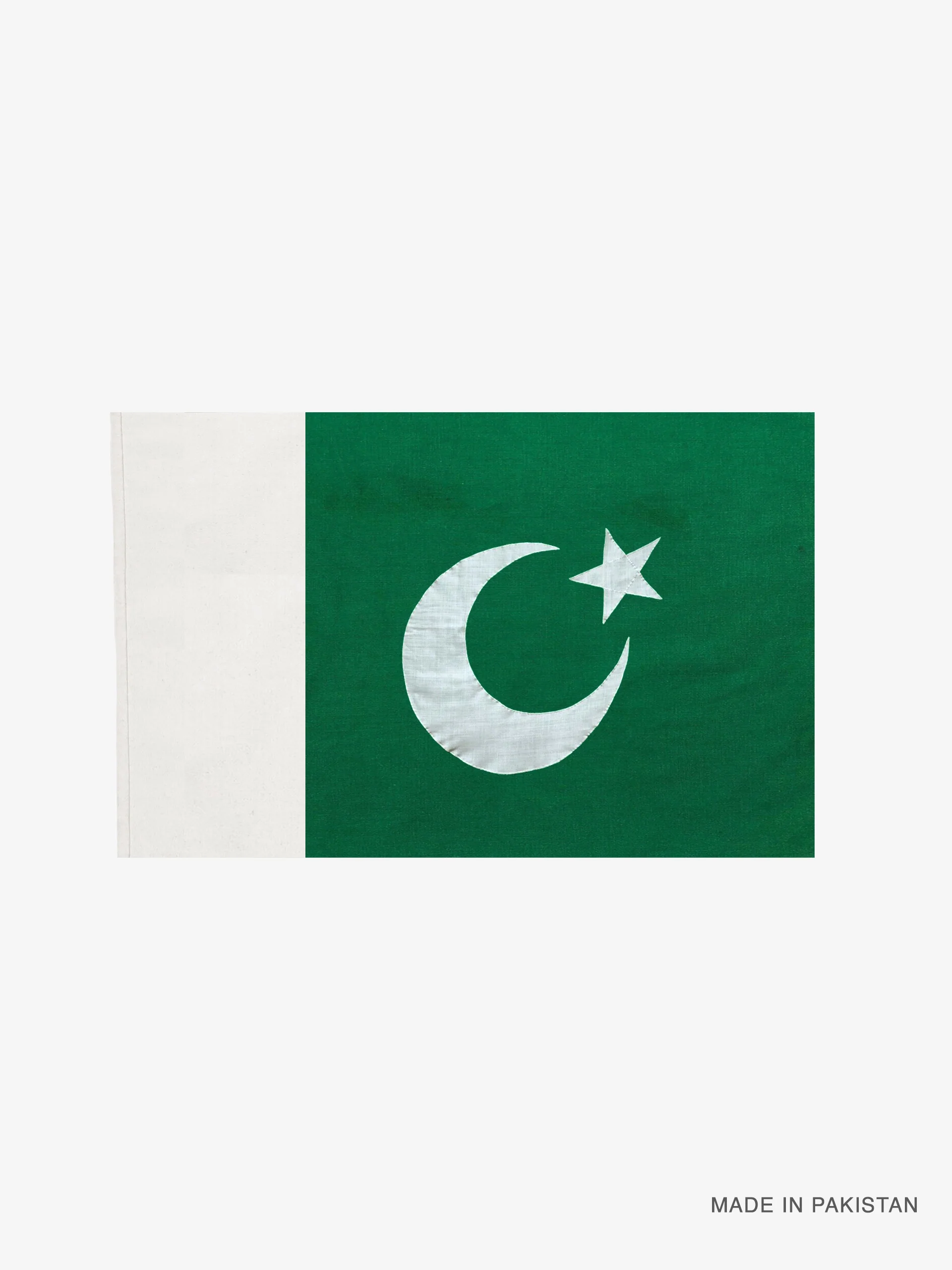
This Nautical 4' x 6' Pakistani Flag was flown on a ship.
• Size: 4' (122cm) x 6' (183cm)
• Made of a blended wool cloth
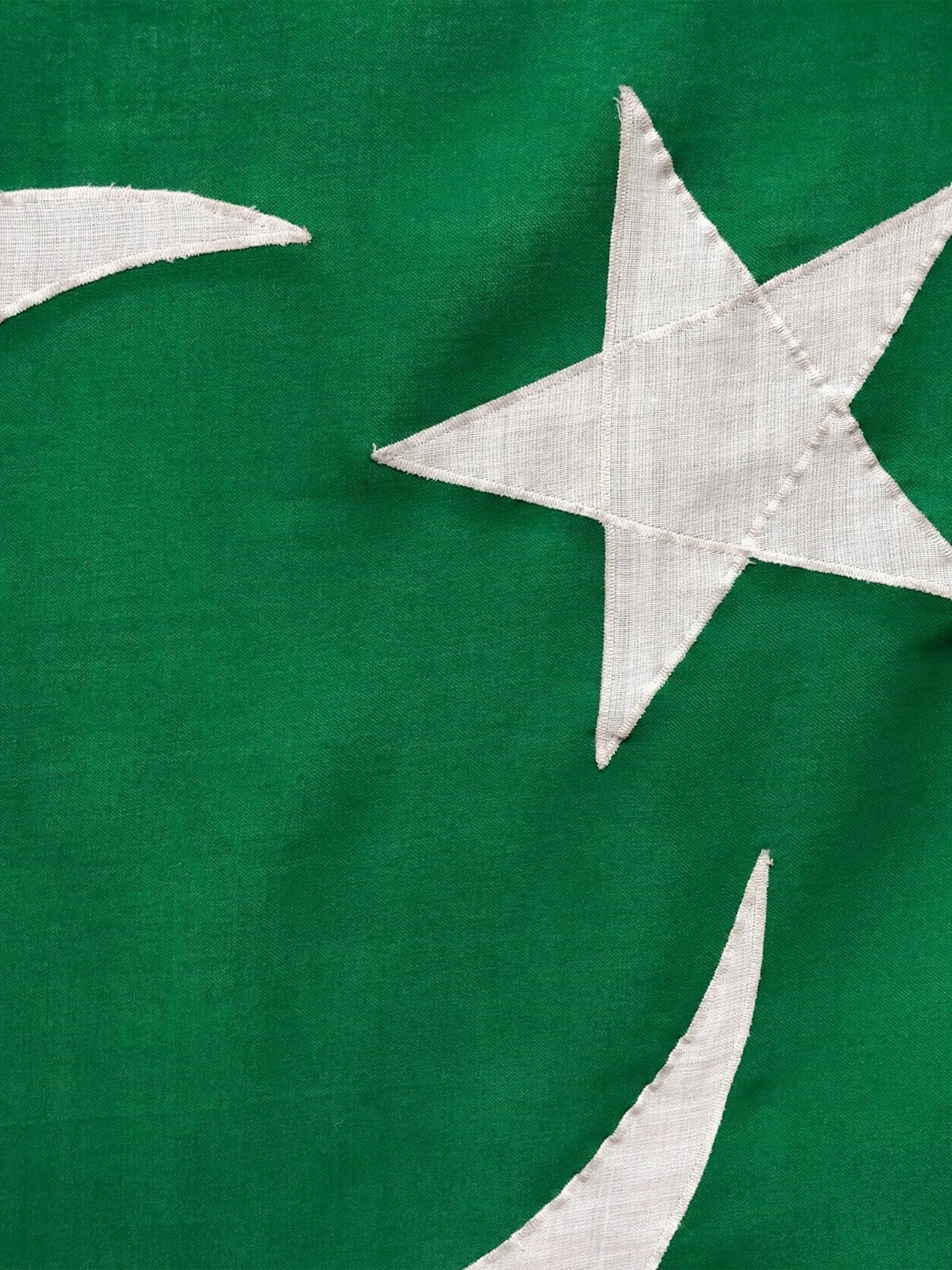
• Sewn design
• From mid 20th century
• Condition: Natural Wear / Good
Rug making in Pakistan has a long and rich history that dates back to ancient times. The region now known as Pakistan was home to several ancient civilizations, including the Indus Valley Civilization, which flourished from around 2600 BCE to 1900 BCE. Archaeological excavations in the area have uncovered evidence of rug weaving and textile production, indicating that these crafts were an important part of the region's economy and culture.
In the centuries that followed, rug making continued to be an important craft in the region, with various techniques and styles emerging over time. One of the most significant developments in Pakistani rug making came during the Mughal era, which lasted from the early 16th century to the mid-19th century. The Mughals, who were of Persian origin, brought with them a rich tradition of rug making, which they shared with local weavers in the region.
During the colonial era, rug making in Pakistan underwent a significant transformation. The British introduced new techniques and materials, such as machine-spun wool and synthetic dyes, which replaced the traditional natural dyes and hand-spun wool. This led to a decline in the quality of Pakistani rugs, as many weavers began to prioritize speed and efficiency over craftsmanship.
In the decades following Pakistan's independence in 1947, the government launched several initiatives to revive the country's rug making industry. These efforts focused on promoting traditional techniques and materials, and providing training and support to local weavers. As a result, Pakistani rugs began to regain their reputation for quality and craftsmanship.
Product Information
Product Information
Shipping & Returns
Shipping & Returns
Description
Vintage Item
Made in Pakistan
This Nautical 4' x 6' Pakistani Flag was flown on a ship.
• Size: 4' (122cm) x 6' (183cm)
• Made of a blended wool cloth
• Sewn design
• From mid 20th century
• Condition: Natural Wear / Good
Rug making in Pakistan has a long and rich history that dates back to ancient times. The region now known as Pakistan was home to several ancient civilizations, including the Indus Valley Civilization, which flourished from around 2600 BCE to 1900 BCE. Archaeological excavations in the area have uncovered evidence of rug weaving and textile production, indicating that these crafts were an important part of the region's economy and culture.
In the centuries that followed, rug making continued to be an important craft in the region, with various techniques and styles emerging over time. One of the most significant developments in Pakistani rug making came during the Mughal era, which lasted from the early 16th century to the mid-19th century. The Mughals, who were of Persian origin, brought with them a rich tradition of rug making, which they shared with local weavers in the region.
During the colonial era, rug making in Pakistan underwent a significant transformation. The British introduced new techniques and materials, such as machine-spun wool and synthetic dyes, which replaced the traditional natural dyes and hand-spun wool. This led to a decline in the quality of Pakistani rugs, as many weavers began to prioritize speed and efficiency over craftsmanship.
In the decades following Pakistan's independence in 1947, the government launched several initiatives to revive the country's rug making industry. These efforts focused on promoting traditional techniques and materials, and providing training and support to local weavers. As a result, Pakistani rugs began to regain their reputation for quality and craftsmanship.