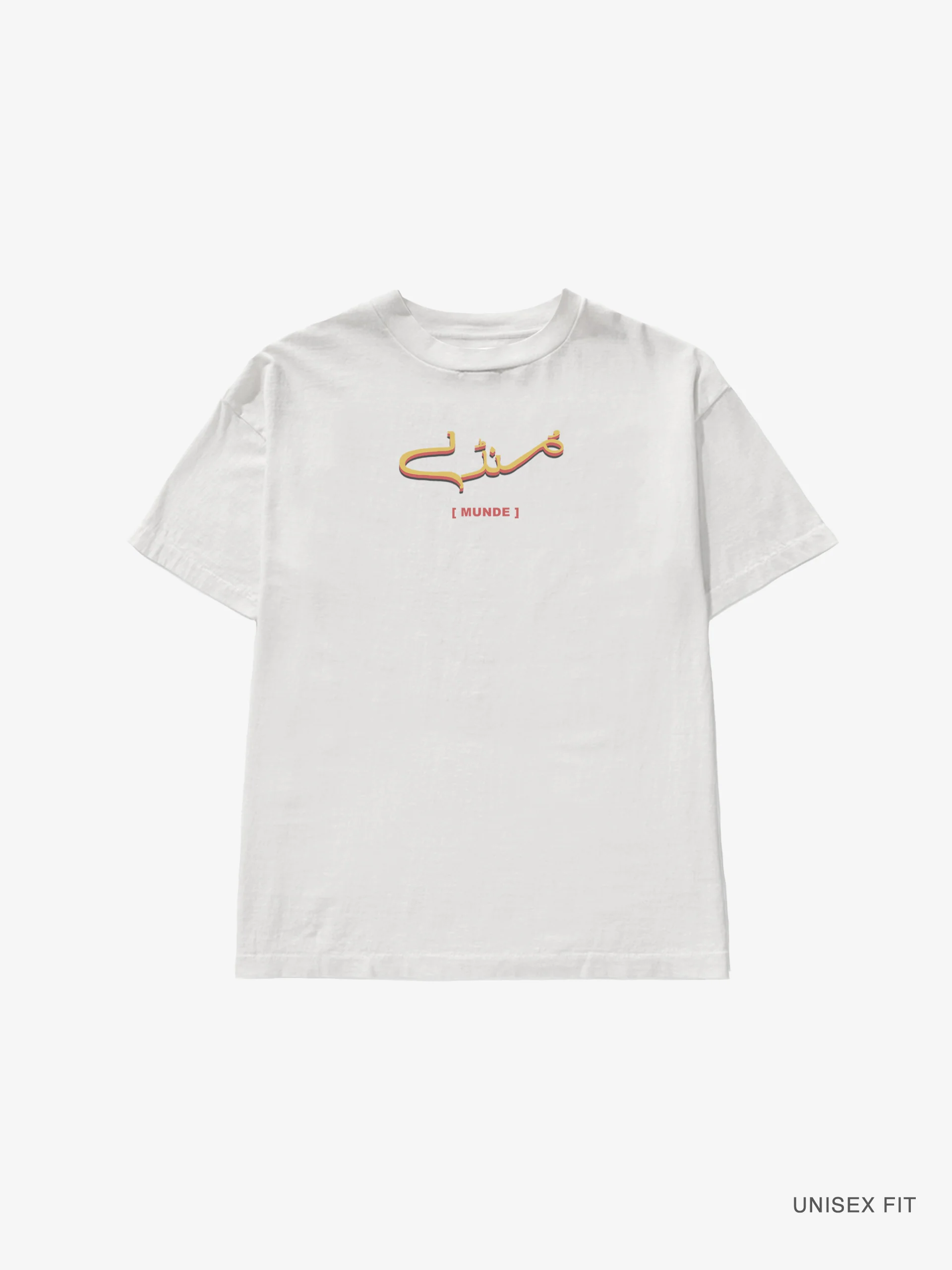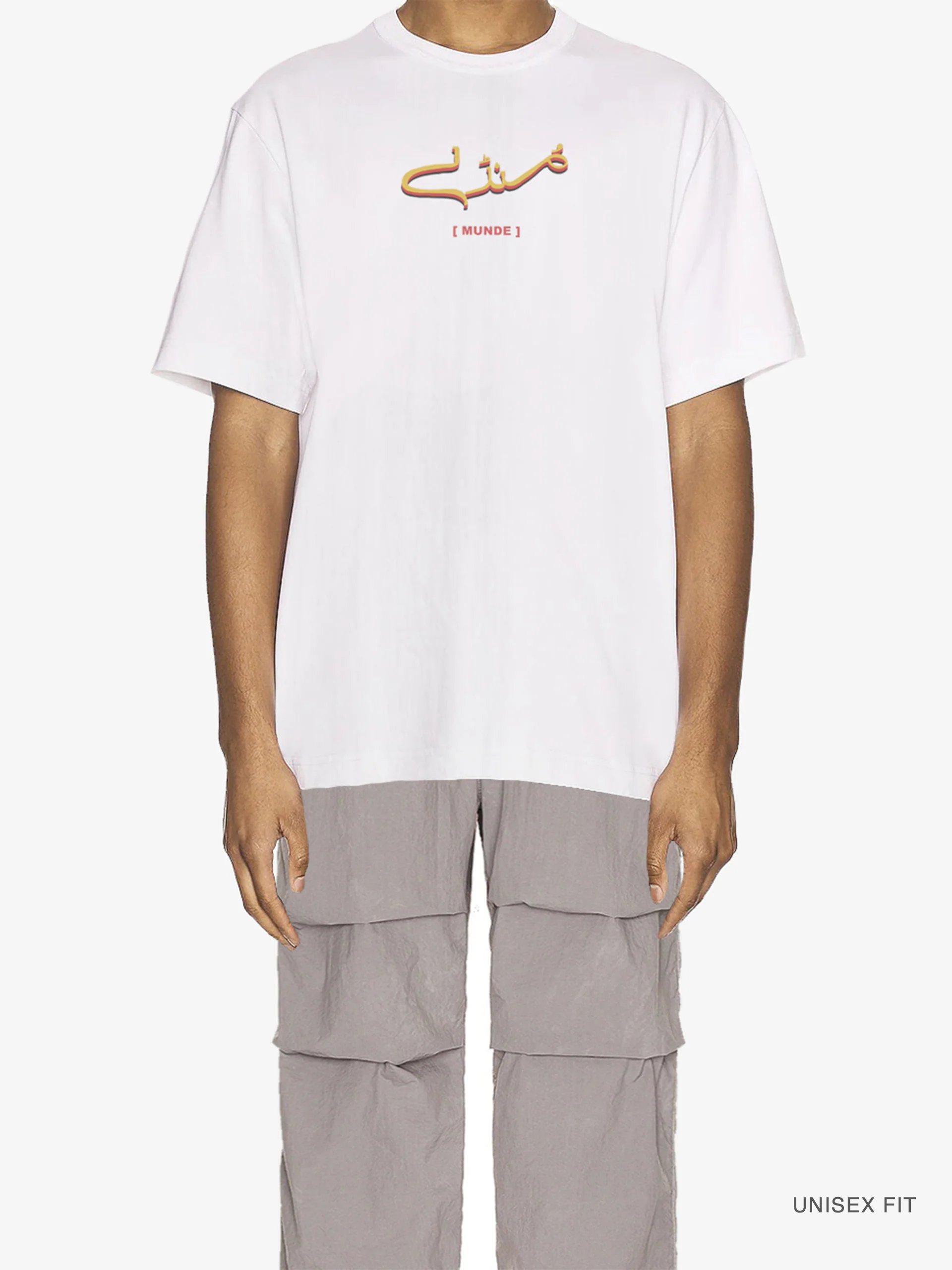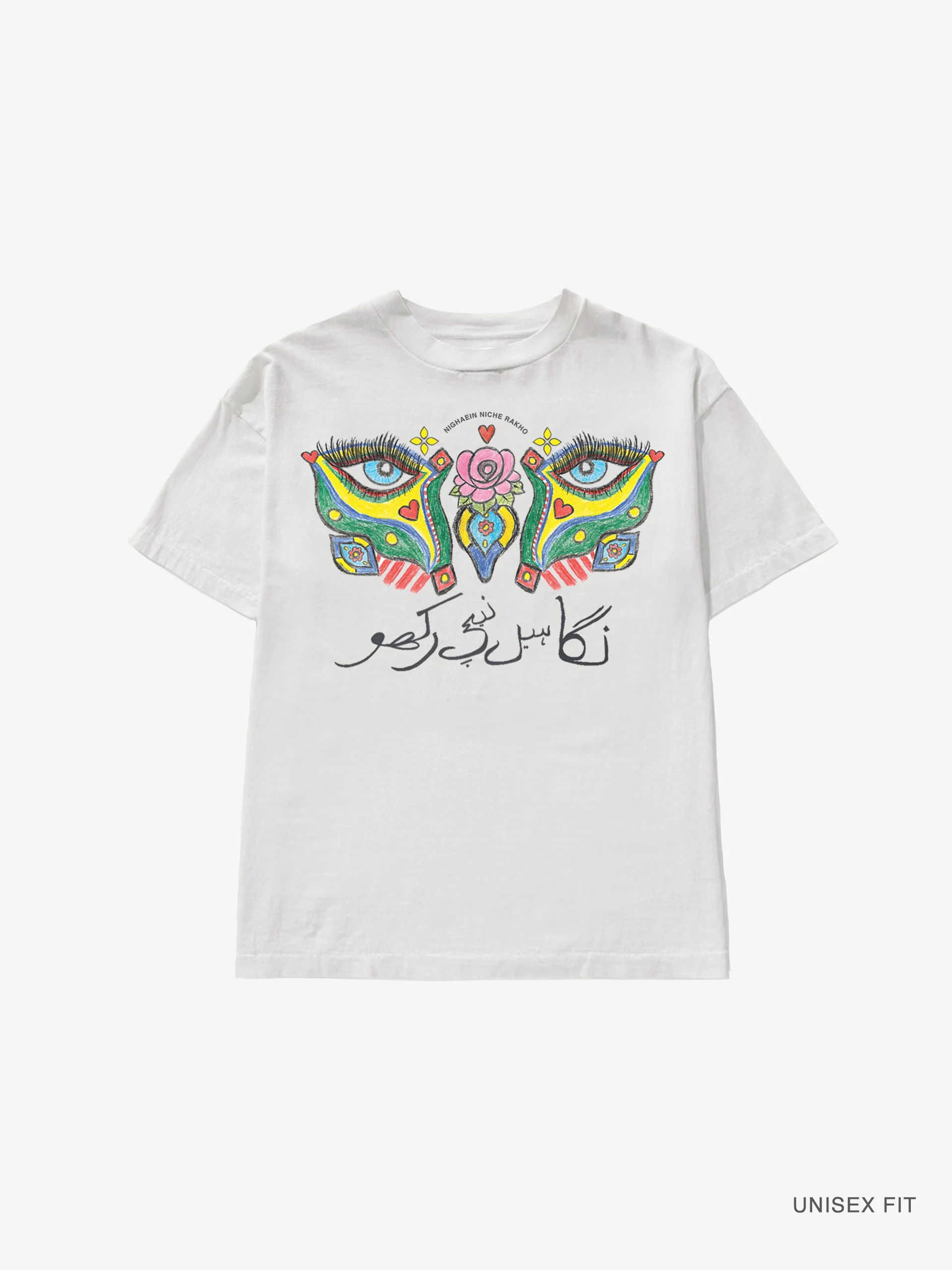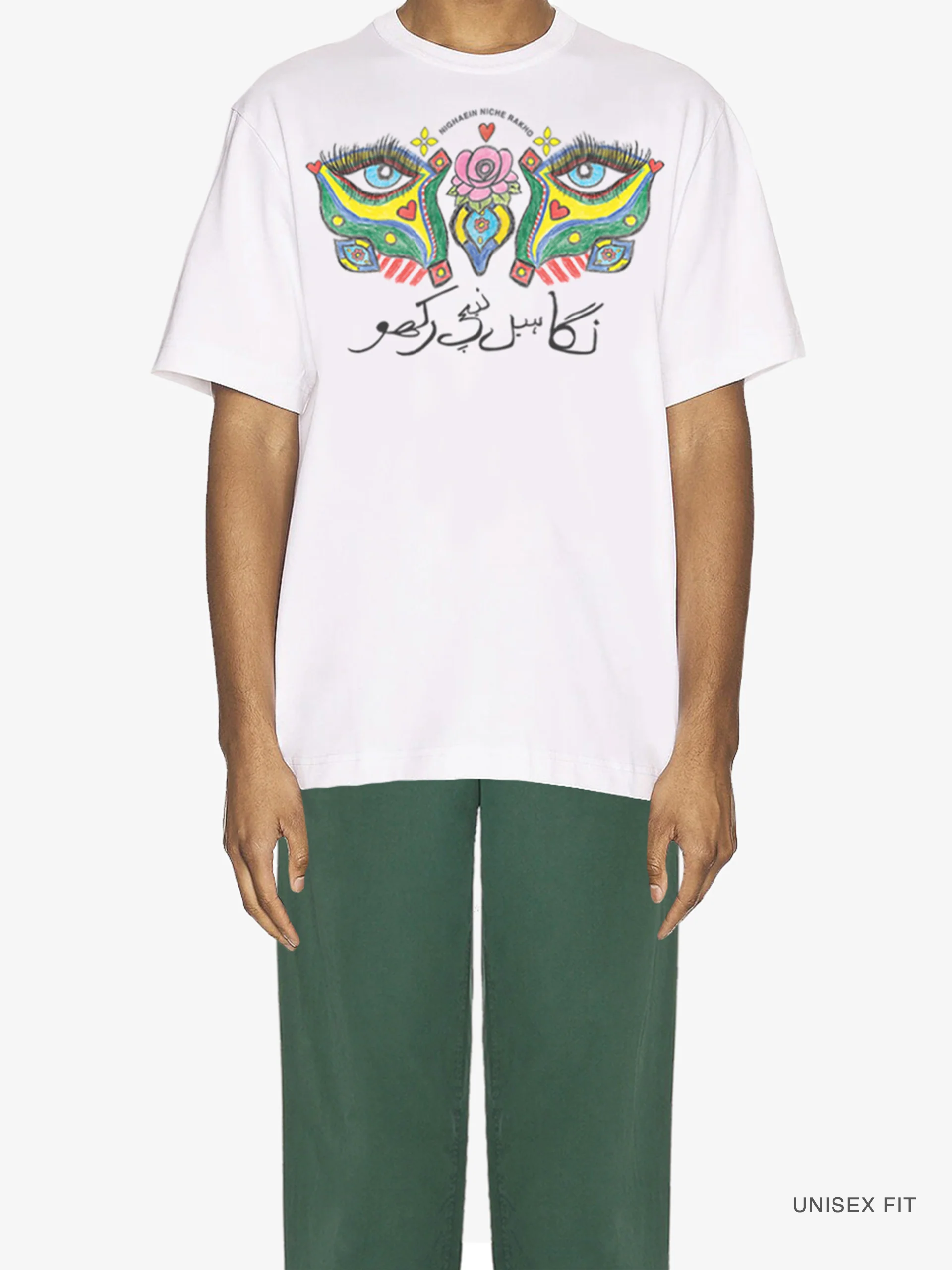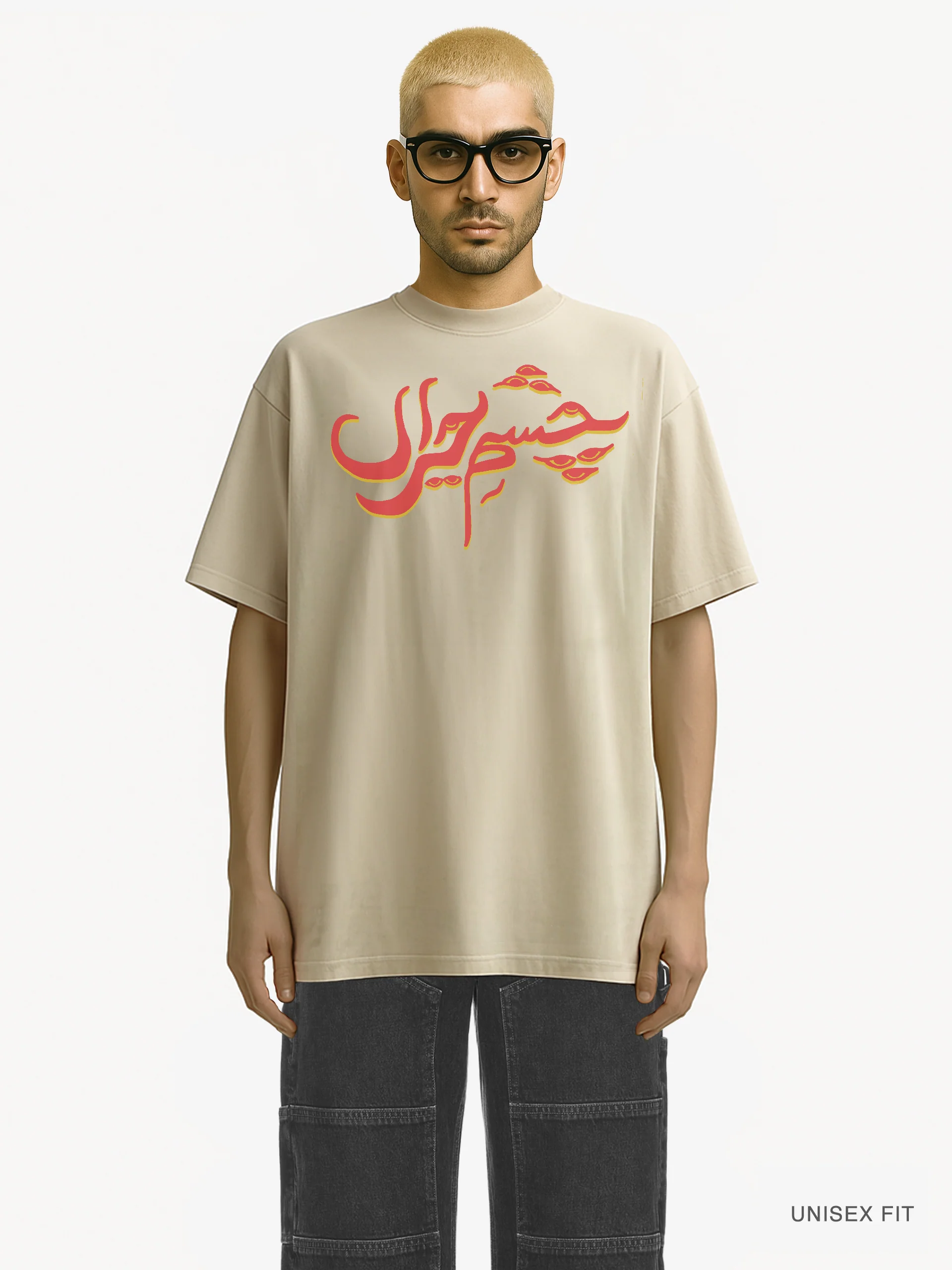
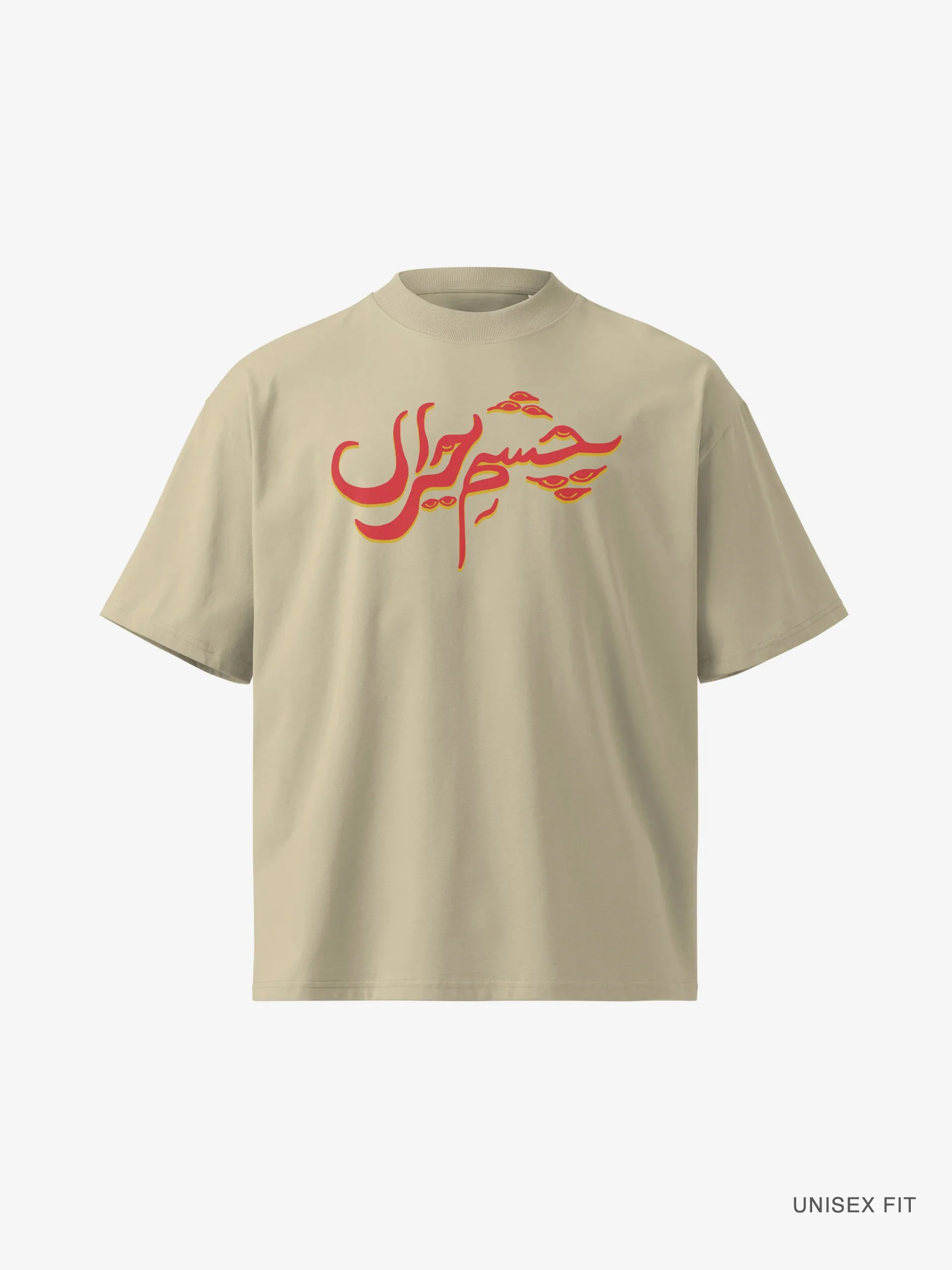
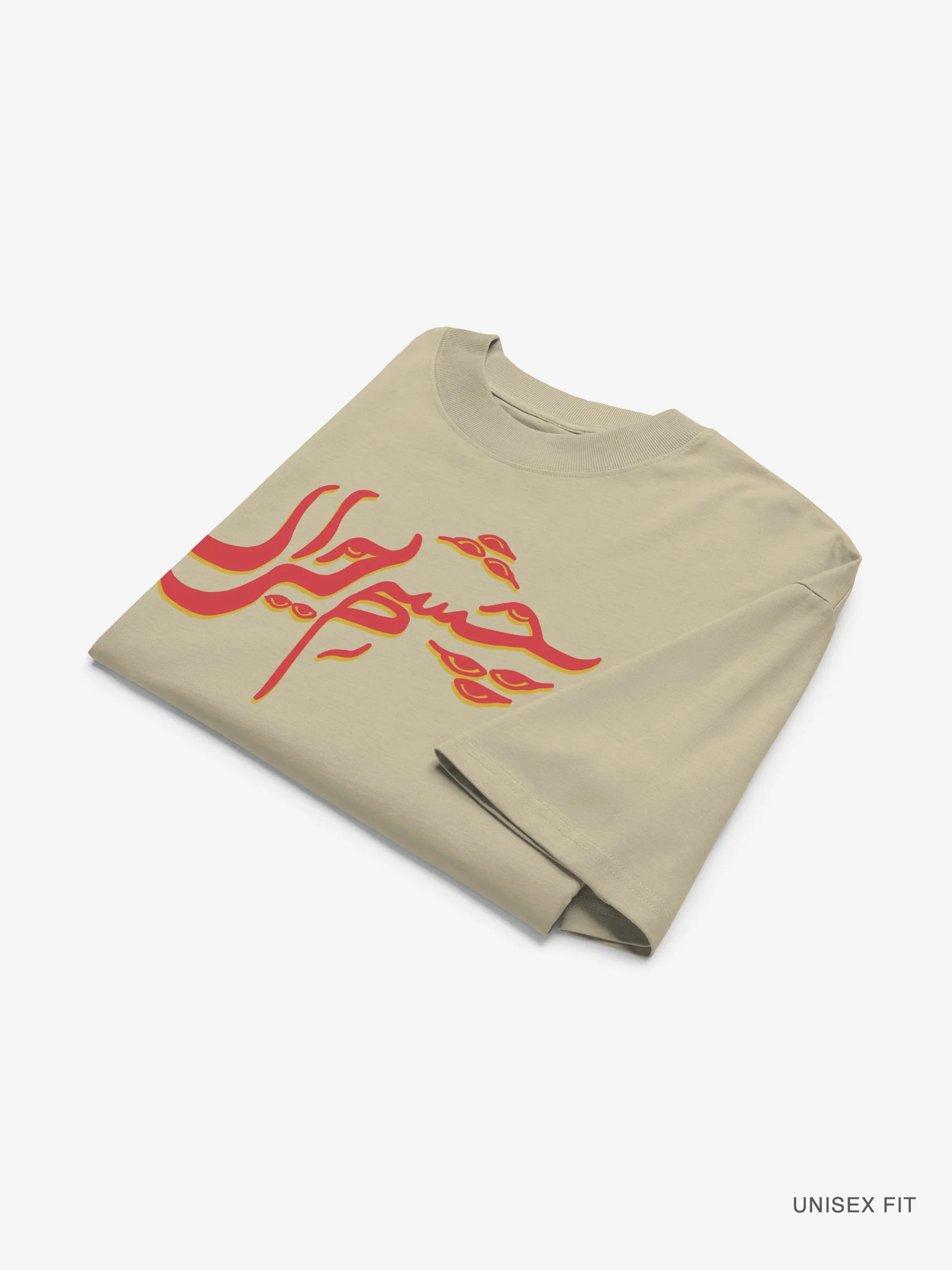
Premium Oversized | Chasm-E-Hairan "Eyes of Wonder" Organic Cotton Tee

Our premium options are for an elevated quality and look made of 100% organic ringspun cotton, boasting special characteristics different than our classic tees such as drop shoulders, raised neck collar, and an oversized fit.
Shipping:
Ships immediately. Most deliver to door in 6-10 days.
Designer's Fit Guide:
Sourced tee fits oversized with drop shoulders. Depending on how you want to style it, your regular size will style baggy and slightly longer in length. Men and women often order one size down their usual size. See measurements for accuracy.
Measurements:
Size Guide
Garment Details:
• Urdu Reads: "Chasm-e-Hairan (Eyes of Wonder)"
• 100% Organic Ringspun Cotton
• Dropped Shoulder
• Color: Khaki
• Fabric Weight: 5.9 oz/yd²
• DTG Print Technique on Sourced Tee
• PETA-Approved Vegan Fabric
• Oversized Fit
Story:
Influenced by the Urdu poetry that might have woven into our childhood memories, as we observed our elders embracing, reading, and writing "shers" from our language, "Chashm-e-Hairan" is a phrase that shares Persian & Urdu linguistics that can be translated to "astonished eyes" or "eyes of wonder". It is often used poetically to describe a state of awe.
Urdu's roots can be traced back to the interactions between Persian-speaking Central Asian invaders from the 11th -13th centuries and the indigenous languages of the Indian subcontinent. This interaction gave rise to a new language that incorporated elements of Persian, Arabic, Turkish, and local vernaculars.
During the Delhi Sultanate, Persian was the court language, and poets like Amir Khusro played a crucial role in shaping the linguistic and literary landscape. Khusro is often regarded as the "father of Urdu literature" for his contributions to the early development of the language.
The British colonial period marked a shift in linguistic dynamics. Urdu started to gain recognition and popularity among the common people. Poets like Mirza Ghalib, with his profound philosophical reflections and mastery of language, became a central figure in Urdu poetry during this time and continued to influence Pakistani culture.
Original: $42.00
-65%$42.00
$14.70Product Information
Product Information
Shipping & Returns
Shipping & Returns
Description
Our premium options are for an elevated quality and look made of 100% organic ringspun cotton, boasting special characteristics different than our classic tees such as drop shoulders, raised neck collar, and an oversized fit.
Shipping:
Ships immediately. Most deliver to door in 6-10 days.
Designer's Fit Guide:
Sourced tee fits oversized with drop shoulders. Depending on how you want to style it, your regular size will style baggy and slightly longer in length. Men and women often order one size down their usual size. See measurements for accuracy.
Measurements:
Size Guide
Garment Details:
• Urdu Reads: "Chasm-e-Hairan (Eyes of Wonder)"
• 100% Organic Ringspun Cotton
• Dropped Shoulder
• Color: Khaki
• Fabric Weight: 5.9 oz/yd²
• DTG Print Technique on Sourced Tee
• PETA-Approved Vegan Fabric
• Oversized Fit
Story:
Influenced by the Urdu poetry that might have woven into our childhood memories, as we observed our elders embracing, reading, and writing "shers" from our language, "Chashm-e-Hairan" is a phrase that shares Persian & Urdu linguistics that can be translated to "astonished eyes" or "eyes of wonder". It is often used poetically to describe a state of awe.
Urdu's roots can be traced back to the interactions between Persian-speaking Central Asian invaders from the 11th -13th centuries and the indigenous languages of the Indian subcontinent. This interaction gave rise to a new language that incorporated elements of Persian, Arabic, Turkish, and local vernaculars.
During the Delhi Sultanate, Persian was the court language, and poets like Amir Khusro played a crucial role in shaping the linguistic and literary landscape. Khusro is often regarded as the "father of Urdu literature" for his contributions to the early development of the language.
The British colonial period marked a shift in linguistic dynamics. Urdu started to gain recognition and popularity among the common people. Poets like Mirza Ghalib, with his profound philosophical reflections and mastery of language, became a central figure in Urdu poetry during this time and continued to influence Pakistani culture.